
(Bio)chemistry
Eating a good life?
No-surprise-but-still-pretty-valuable research on dietary patterns that lead to a healthy life (preserving physical and mental health, cognition, protecting ourselves from chronic diseases).
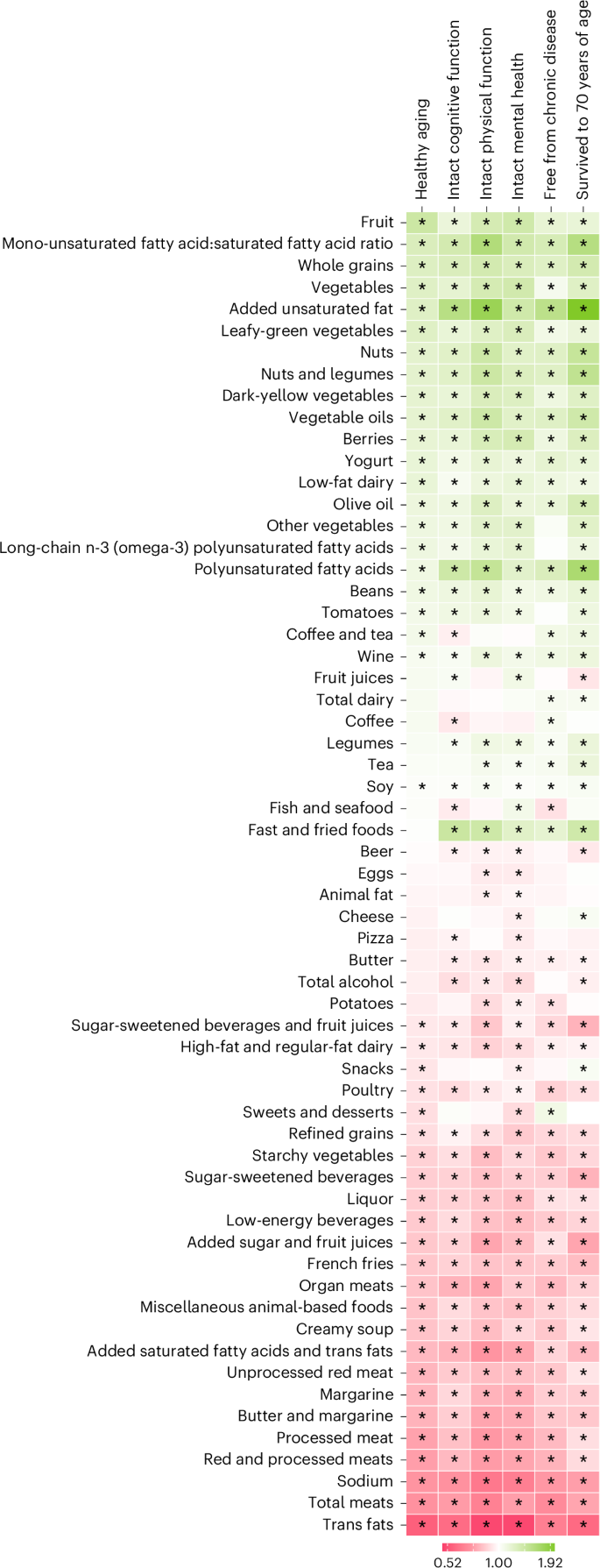
No shit, Sherlock. Basically, the diet stems from this as follows:
🍔 Minimize processed foods, meat, margarine
🥓 Moderation with saturated fats
🍷 A sprinkle of wine doesn’t hurt, as I’ve covered a couple of years ago - new research confirms this (OR 0.85 for low volume drinkers)
🥗 Focus on whole grains, fruits and vegetables
🫐 Add some yogurt, legumes and berries
(depending on your financial status)

Is (mediterranean) italian diet THAT good?
So, mediterranean diet is all the rage - the bestest, the longevitiest, the healthiest:

So, WTF’s with Italy?
Still, one of the centers, Italy, spends a lot on healthcare despite the all-awesome diet:

Per capita figures are different, but still Italy’s not the healthiest (sourced the population from a bullshitty AI machine, so it may be mistaken…). I’ve calculated (petty table here):
per capita healthcare costs
per capita GDP/per capita costs (→ i.e. if a country is more ‘wealthy’, will this translate to more costs? + healthcare costs a lot more in wealthier countries?)
Turns out, when we account for GDP, and calculate per capita costs - magically the wealthiest countries take the lead in ‘we spend a smaller portion of our GDP’:

And the final touch - correcting by healthcare costs index (used a super-dumb ‘divide and multiply by 100’ heuristic to correct the prices):

Doesn’t do much for Italy, though
When you compare mediterranean diet with contemporary dietary patterns in Italy, there are some differences IMO:
⬆️ salt/sodium
⬆️ meat (it’s savory and tasty, right?)
⬆️ processed wheat flour (as it’s cheaper)
⬇️ high-quality nuts, seeds, oils (as they’re more expensive than before)
Aand it shows!

And back to the prized mediterranean diet - it’s good, yeah, but having a stable economy and healthcare access helps, too. No diets and tight-knit families will save one from instability (+ shit life syndrome also takes its toll) and everyday financial stress because the country isn’t faring good:

Thoughts
Could some countries benefit from a policy change? What are possible n-th order effects? E.g.:
Widespread use of GLP-1 agonists may influence families’ dietary patterns (and it’s only gonna rise in the next years)
How will this influence investing and pharma trends? I.e. will platforms for faster/better development of GLP-1 (or other paradigm drugs, like DACRA or MC4R, melanocortin receptor, agonists + gene therapy/microbiome modulators) emerge and flourish?
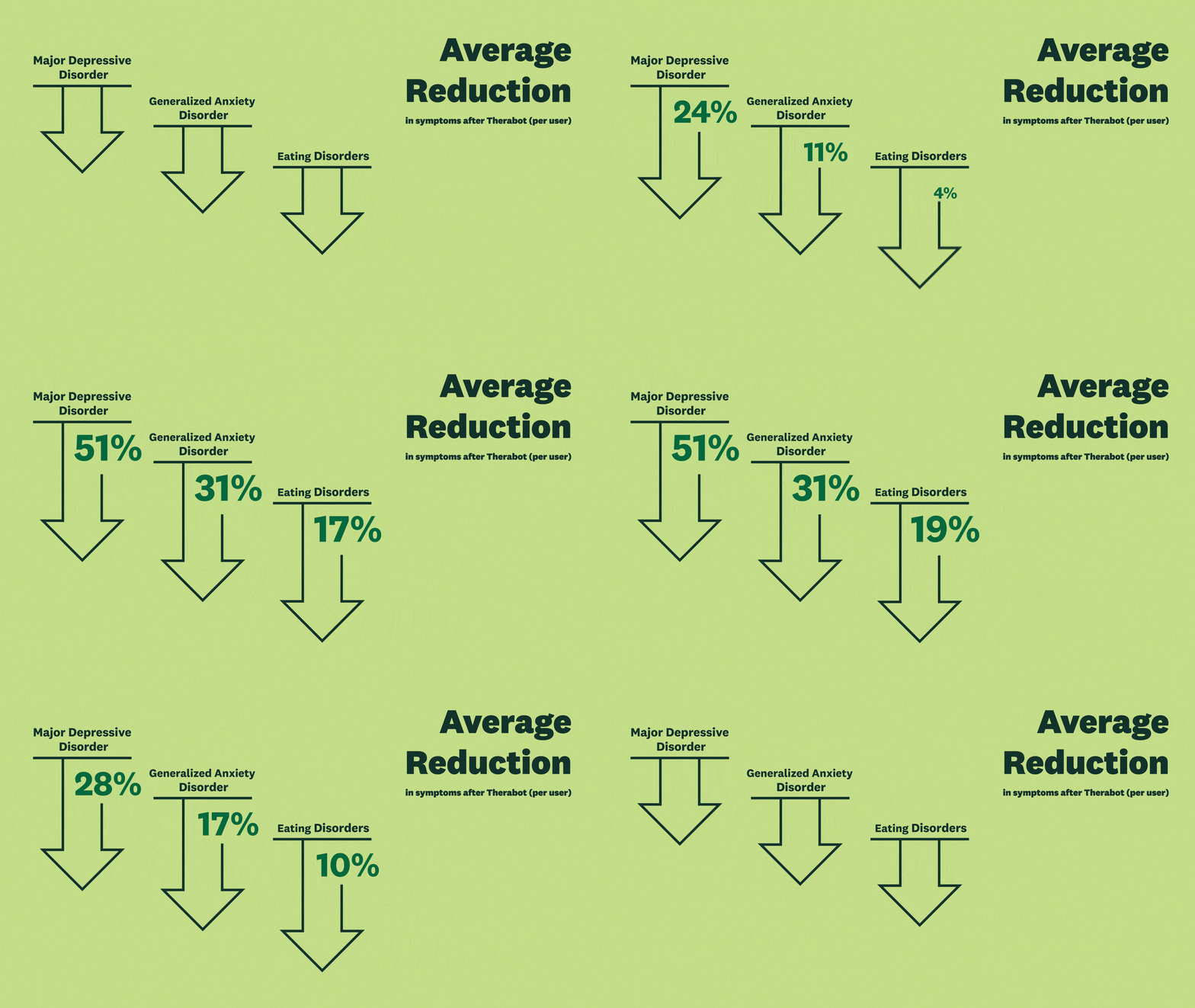
Will other paradigms emerge by the time I write a new post?Will mandatory or easier access to AI-assisted mental health care (which is already showing good results, below) improve the well-being in these countries?
(Bio)tech
Lmao, a new LLM dropped - for drug design and discovery

TxGemma family from DeepMind is fine-tuned from Gemma 2, and seems to be current SOTA.
What’s that?
The authors claim it helps with the following tasks:
Classification
Given a drug SMILES string, the model can:
Predict the drug's toxicity.
Predict whether the drug can cross the blood-brain barrier.
Predict whether the drug is active against a certain protein e.g., a choline transporter.
Predict whether the drug is a carcinogen.
Regression
Given a drug SMILES string, predict the lipophilicity.
Given a drug SMILES string and a cell line description, predict the drug sensitivity level.
Given the target amino acid sequence and compound SMILES string, predict their binding affinity.
Given a disease description and the amino acid sequence of a gene, predict their association.
Generation
- Given a product, the model can generate the reactant set.
Links links
Besides that, the folks had included examples of:
using in an agentic workflow (Agentic-Tx)
Download: 🤗 Hugging Face + ⏃ Vertex Models

End-to-end applications look fun, potentially reducing the development time significantly, with models such as this acting like a tool-using and slightly-reasoning glue layer.
Though(ts)
Someone’s gonna fine-tune on Gemma 3/Qwen or a new-er Deepseek and maybe brag with a marginally better SOTA
How would reasoning models fare here? Or they’re not that needed given a good agentic workflow (that’s food for thought)
And after all - why hadn’t anyone make a tokenized agent structure framework, and why did I register for Berkeley hackathon…
(Not so bio)economy
This “data alpha”, as you call it - is it here?
Again, the same argument as seen before:
Hey, there are so much VCs, and the datasets are all the same 🫠
Everything is commoditized, the decision-making is so so doomed 🥺
We’ll have to make (predictably) irrational decisions (i.e. challenging the status quo)
The winners will be small, adaptable, nimble and specialized 🐁

Just like small mammals in the age of dinosaurs.
E.g. Level VC, who had posted their pipeline and data stack - good for us to have a peek. They’re using nocoDB and a sleught of in-house data ingesters (from file uploads to call notes, web crawlers and KOL posts) to intergate all the possible data into an agentic LLM workflow.
Some of the examples are…Portfolio monitoring:

Experts’ database:

Looks pretty rad to me, mates (ahoy)!
Bottom line (again Mr. Obvious here)
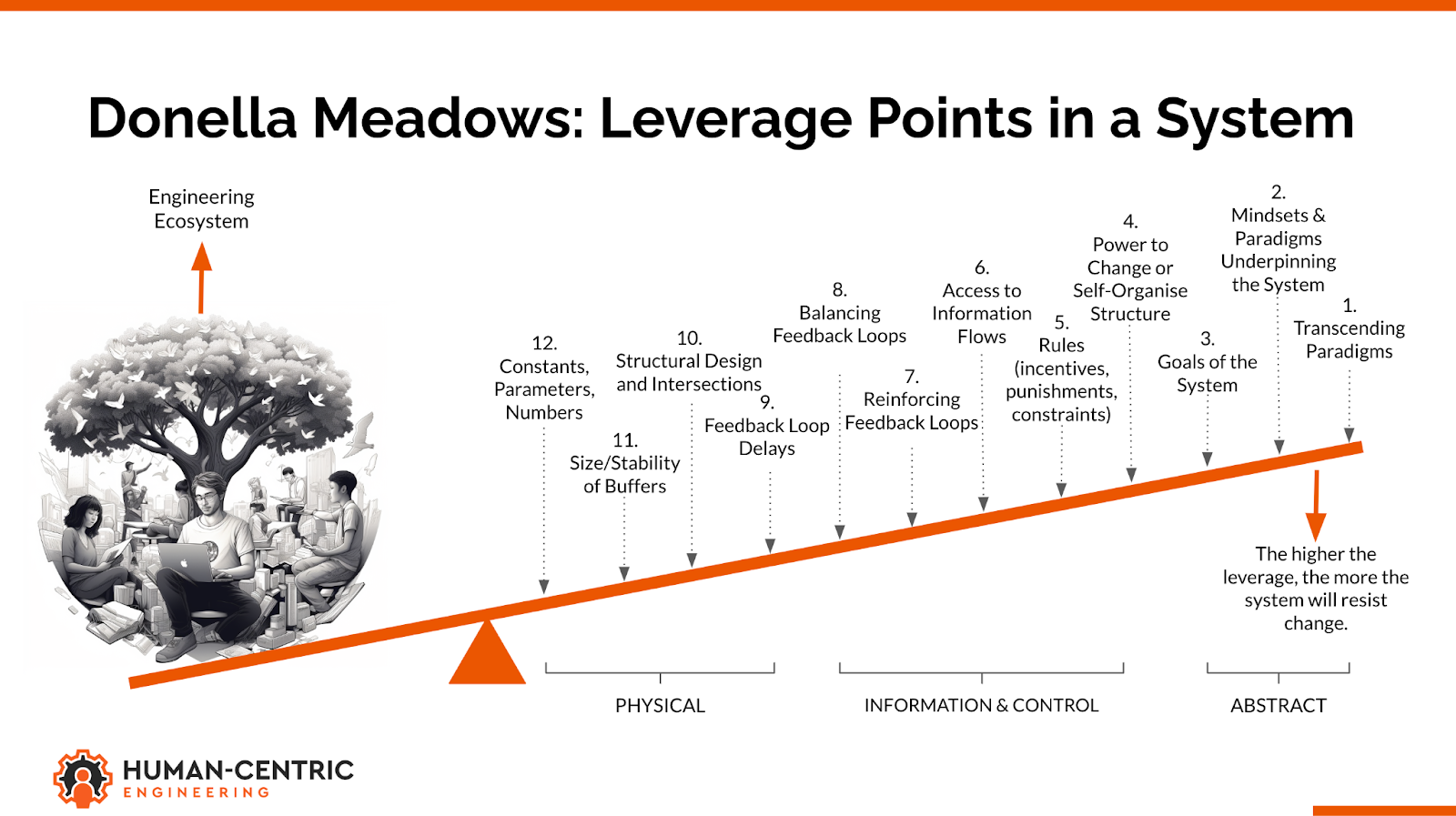
Rise to the first level of Donella Meadows’ leverage points - change paradigms. This includes hackathons, synergies, income-based investing, university/drop-out stars’ nurturing etc.
Smaller bets in a larger portfolio of companies may be beneficial, akin to dutching. However,
The oldest adage always works:
Do what you know good, be always aware of the unknowns. After all, we’re here to extract the slivers of certainty from chaos using our world models, aren’t we?

Welcome to Teleogenic❣️
Other places I cross-post (not always) to:


